
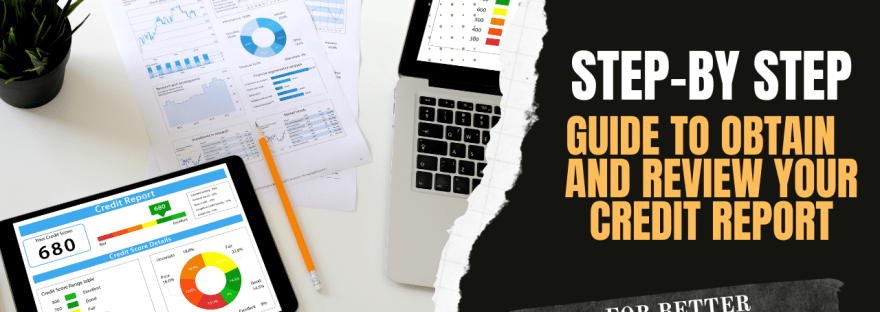
Maintaining a healthy credit score is essential for your financial well-being. Your credit score influences your ability to secure loans, credit cards, and even affect the interest rates you receive.
To ensure the accuracy of your credit report and take control of your financial future, it’s crucial to obtain and review your credit reports regularly. In this blog, we’ll provide a step-by-step guide on how to do just that.
Why Reviewing Your Credit Reports is Important
Before we dive into the “how-to” of obtaining and reviewing your credit reports, let’s understand why it’s vital to stay informed about your credit standing.
The Role of Credit Reports
Your credit reports are comprehensive records of your financial history. They include information about your credit accounts, payment history, and any negative or positive financial events. Creditors and lenders use this data to evaluate your creditworthiness.
Monitoring Your Financial Health
Regularly reviewing your credit reports allows you to:
- Detect and correct errors or inaccuracies.
- Identify potential instances of identity theft.
- Ensure your credit score reflects your financial behavior accurately.

How to Obtain Your Credit Reports
Now, let’s get into the practical steps for obtaining your credit reports
- Order Your Free Annual Credit Reports
The Fair Credit Reporting Act (FCRA) entitles you to a free annual credit report from each of the three major credit bureaus: Equifax, Experian, and TransUnion. To obtain these reports, visit AnnualCreditReport.com, the only authorized source for free credit reports. - Request Additional Reports
You may want to request reports more frequently than once a year or obtain additional reports from other specialty bureaus (LexisNexis, Innovis).
Reviewing Your Credit Reports
With your credit reports in hand, it’s time to review them for accuracy.
- Check Personal Information
Start by verifying that your personal information, such as your name, address, and Social Security number, is correct. - Examine Credit Accounts
Review all your credit accounts. Ensure that each account’s information is accurate, including the account balance, payment history, and credit limit. - Scrutinize Negative Information
Keywords like “negative information on credit report” can be useful in this section. Look for any late payments, collections, or judgments. If you spot inaccuracies, dispute them immediately. - Verify Public Records
Search for any bankruptcies, tax liens, or civil judgments. Make sure this information is correct and up-to-date. - Identify Hard Inquiries
Keyword: “hard inquiries on credit report.” Check for any hard inquiries made by lenders when you applied for credit. Ensure they are legitimate and authorized.
Disputing Errors
If you find any errors during your credit report review, it’s essential to dispute them.
How to Dispute Errors:
- Contact the credit bureau reporting the error.
- Provide supporting documentation.
- Follow up on the dispute’s status until resolved.

Improving Your Credit Score
The good news is that improving your credit score doesn’t require a financial wizardry; it simply demands diligence and smart financial habits like:
- Paying your bills on time.
- Reducing credit card balances.
- Avoid opening too many new accounts.
- Keep your oldest accounts open.
- Monitor your credit regularly.
Reviewing your credit reports is an integral part of maintaining good financial health. By following this step-by-step guide, you can take control of your financial future and ensure that your credit reports accurately represent your creditworthiness. Don’t delay—start reviewing your credit reports today for a brighter financial tomorrow.

FTC Disclaimer: This is not a sponsored video or article. All opinions are genuinely my own. This post also contains affiliate links and I earn a small commission if you make a purchase after clicking on my links. It does not cost you any extra. Thank you for your continued support to keep the Bri Callis Blog going!

 bricallis.blog